Review dimensions, weaving, handle comfort, personalization and packaging before approving a woven hand fan sample for bulk production.
A woven hand fan can look right in a photograph yet feel different when it arrives. The silhouette may be wider than expected, the handle may sit awkwardly in the hand, or the gift sleeve may press against the woven edge. For wedding planners, hospitality buyers and brands, reviewing a physical sample is an opportunity to resolve these details before approving a larger order.
The aim is to establish a clear reference for the finished product. Natural fibers and hand weaving bring variation, so an approval should distinguish acceptable character from issues that affect comfort, presentation or construction. Use the following checklist to make that discussion specific.
1. Identify exactly what the sample represents
Before inspecting the fan, ask whether it is an existing stock sample, a development sample or the proposed final approval sample. A stock piece may demonstrate the weave without showing your selected ribbon, tag or packaging. A development piece may still contain details awaiting revision.
Record the sample reference, material description, intended use and outstanding changes. If the handle differs from the planned production version, write that down. Avoid approving the whole product with a general message such as “looks good” when only the shape has been reviewed.
2. Measure the fan consistently
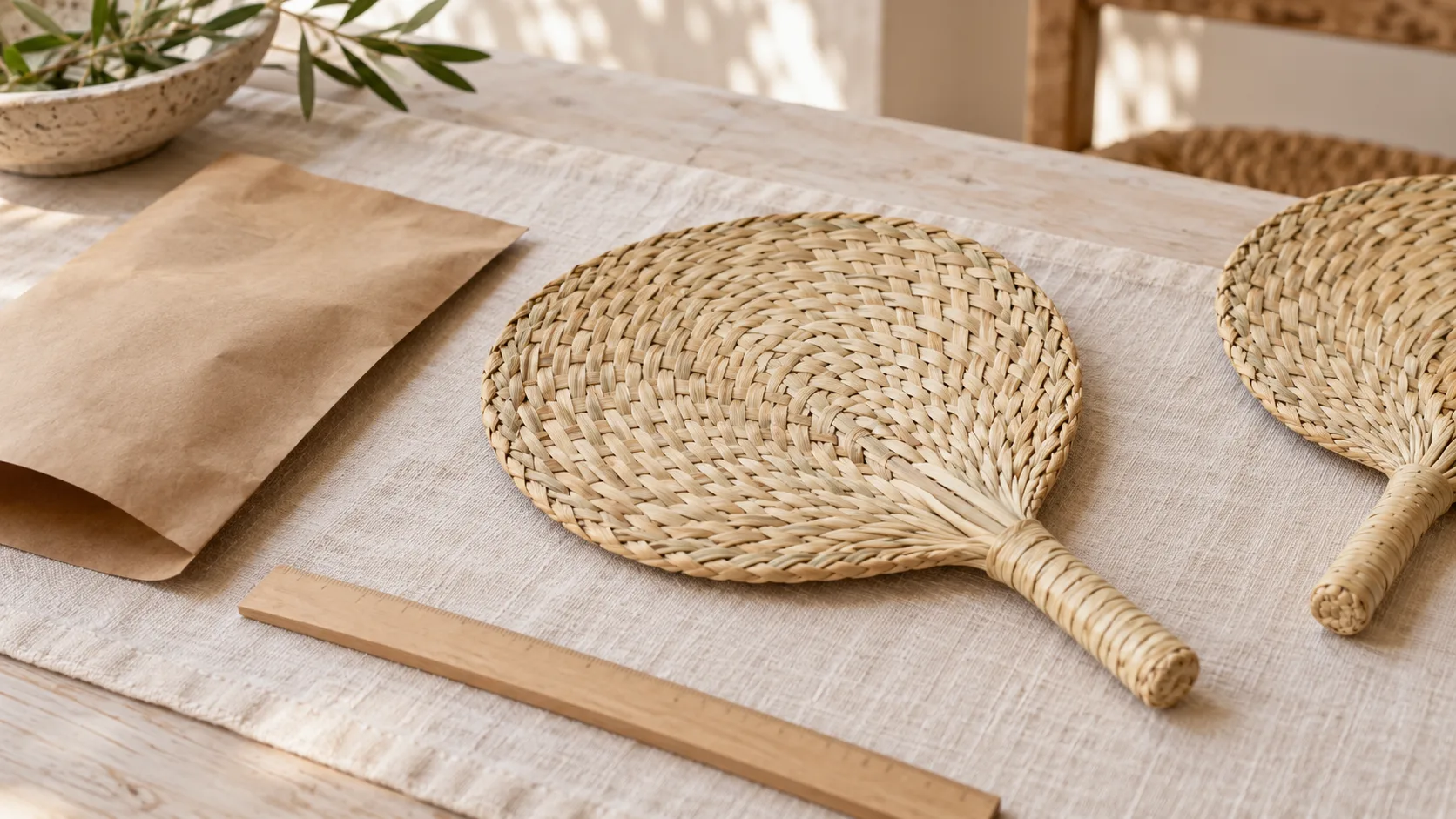
Photograph the fan beside a ruler and record overall height, maximum width and usable handle length. Clarify where each measurement begins and ends. For an irregular outline, identify the points used to measure the widest section.
Compare the dimensions with the intended presentation. Will the fan fit the guest gift bag, ceremony chair arrangement or retail sleeve? Check the packaged size as well as the bare product. Ask the supplier to propose realistic dimensional tolerances for the selected construction, then agree on them in writing rather than assuming every handmade piece will match exactly.
3. Review the weave and natural variation
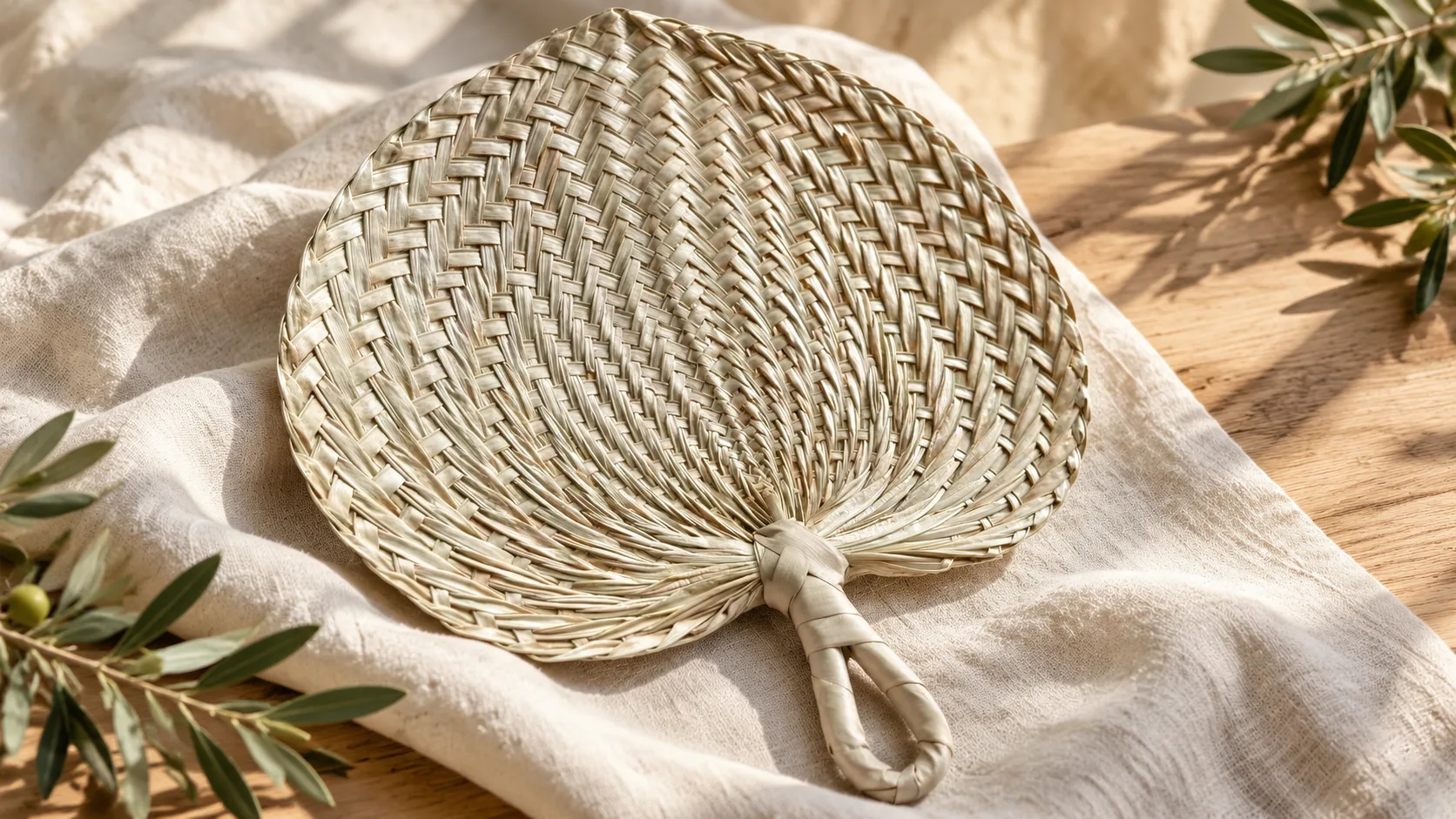
Inspect both sides in neutral daylight. Look at the overall pattern, spacing, edge construction and any areas where fibers join. Turn the fan slowly so that uneven sections are easier to see.
Small differences in shade or fiber width may be acceptable for your collection. Loose ends that catch on clothing, unexpected gaps or visibly unfinished sections need a separate discussion. Describe what you see instead of relying on broad terms such as “premium quality.” If color consistency matters, request representative examples showing the proposed acceptable range. One carefully selected sample cannot show the variation of an entire batch.
4. Check the handle and the feel in use
Hold the fan as a guest or customer would. Move it gently through normal fanning motions and assess grip comfort, balance and any rubbing at the edges. Where there is a separate handle, inspect its attachment and ask how that connection will be checked during production.
Do not improvise force tests and treat them as an agreed inspection standard. If your project needs defined strength or durability checks, discuss the method, conditions and acceptance criteria with the supplier. Note whether the intended use is occasional ceremony comfort, a guest gift or a retail accessory; the same appearance does not establish suitability for every use.
5. Approve personalization on the actual product
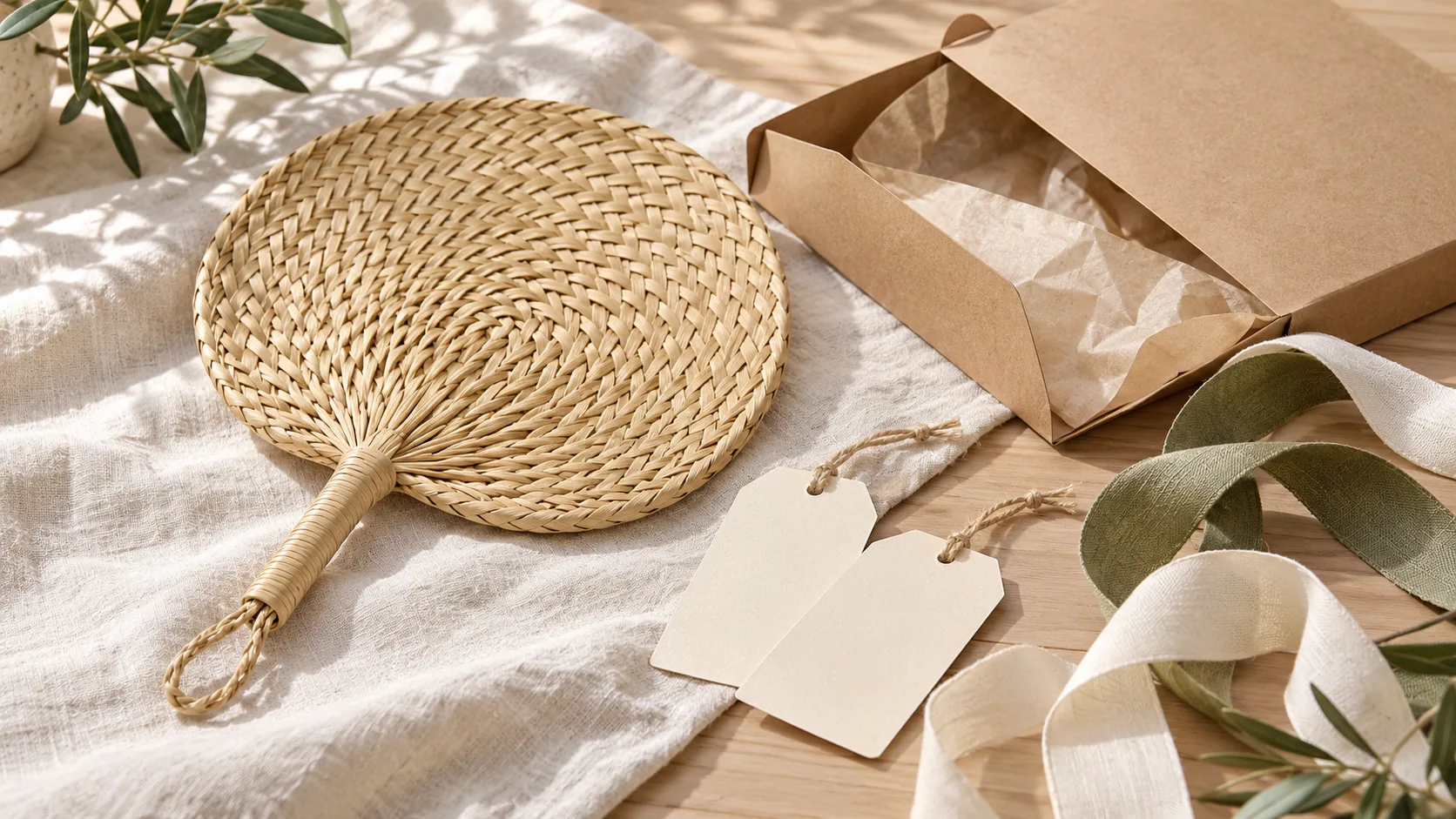
Review the complete combination of fan, ribbon, tag and any approved handle branding. A digital mockup can communicate placement, but the physical sample shows how the decoration sits against a textured surface.
Check spelling, dates, logo proportions, tag orientation and attachment points. Confirm that ribbons do not obstruct the grip and that tags remain readable when the fan is presented. For engraving or other branding, assess the actual result on the chosen material. Keep the approved artwork version with the sample record so an outdated file is not used later.
6. Test the proposed packaging arrangement
Place the fan inside its intended sleeve, pouch or box. Check whether it slides in and out comfortably and whether the packaging changes the shape or presses against accessories. If fans are supplied in bulk, ask how pieces will be separated, counted and arranged inside the carton.
Review the unpacking process too. A wedding team distributing fans shortly before a ceremony may prefer a different packing arrangement from a retailer preparing individual shelf displays. Confirm which labels or inserts are included. Where transport protection needs evaluation, agree on an appropriate packaging check rather than assuming that a tidy sample box proves shipping performance.
7. Turn observations into a clear approval record
Group your notes into approved details, required revisions and unresolved questions. For each revision, identify the location, explain the desired change and attach a close photograph. “Trim the loose fiber at the upper edge” is easier to act on than “improve the finish.”
Keep a dated reference containing the product specification, sample photographs, artwork version, accessory choices and packaging arrangement. Ask whether a revised sample is needed before approval. Retain the approved physical sample where practical, and confirm that the supplier is working from the same reference.
A compact checklist to send with your feedback
- Identity: sample reference and what the sample demonstrates.
- Dimensions: agreed measurement points and proposed tolerances.
- Weave: pattern, edge finish and acceptable natural variation.
- Handling: grip comfort, balance and handle attachment.
- Customization: artwork, spelling, color references and placement.
- Packaging: fit, protection, counting and presentation.
- Approval: accepted details, revisions and the final reference version.
Discuss your sample requirements with WOVENA
A useful sample review connects the visual idea with the way the fan will be handled, packed and presented. It also gives both parties a shared basis for discussing production checks. Sample approval does not replace inspection of the finished order; ask how the agreed details will be reviewed during production and before shipment.
Planning woven fans for a wedding, resort or branded collection? Share your reference image, intended use, estimated quantity, destination and customization ideas with WOVENA. We can discuss suitable fan options and the sample details to review for your project. Available customization and sampling arrangements should be confirmed for the selected design.