Choose a woven hand fan size by reviewing overall dimensions, grip comfort, presentation and packaging fit. Learn what to compare before requesting a custom size.
A woven hand fan can look beautifully proportioned in a product photograph and still be the wrong size for a particular project. It may take up too much room in a welcome bag, feel awkward beside a ceremony program or appear smaller than expected on a display table.
For wedding planners, hospitality buyers and brands, size selection involves more than choosing between a small and a large option. The outline, handle, woven surface and packaging all contribute to how the finished fan is handled and presented.
There is no single size that suits every application. A more useful approach is to compare the available designs against the way your guests or customers will actually receive, carry and use them.
1. Separate overall dimensions from the fan body
Start by asking which measurements the product description includes. Overall height may include the handle, while body height describes only the woven section. Maximum width can also be measured at different points on an irregular outline.
Request a simple measurement image showing the relevant points. Record overall height, maximum width, woven body height and usable handle length where applicable.
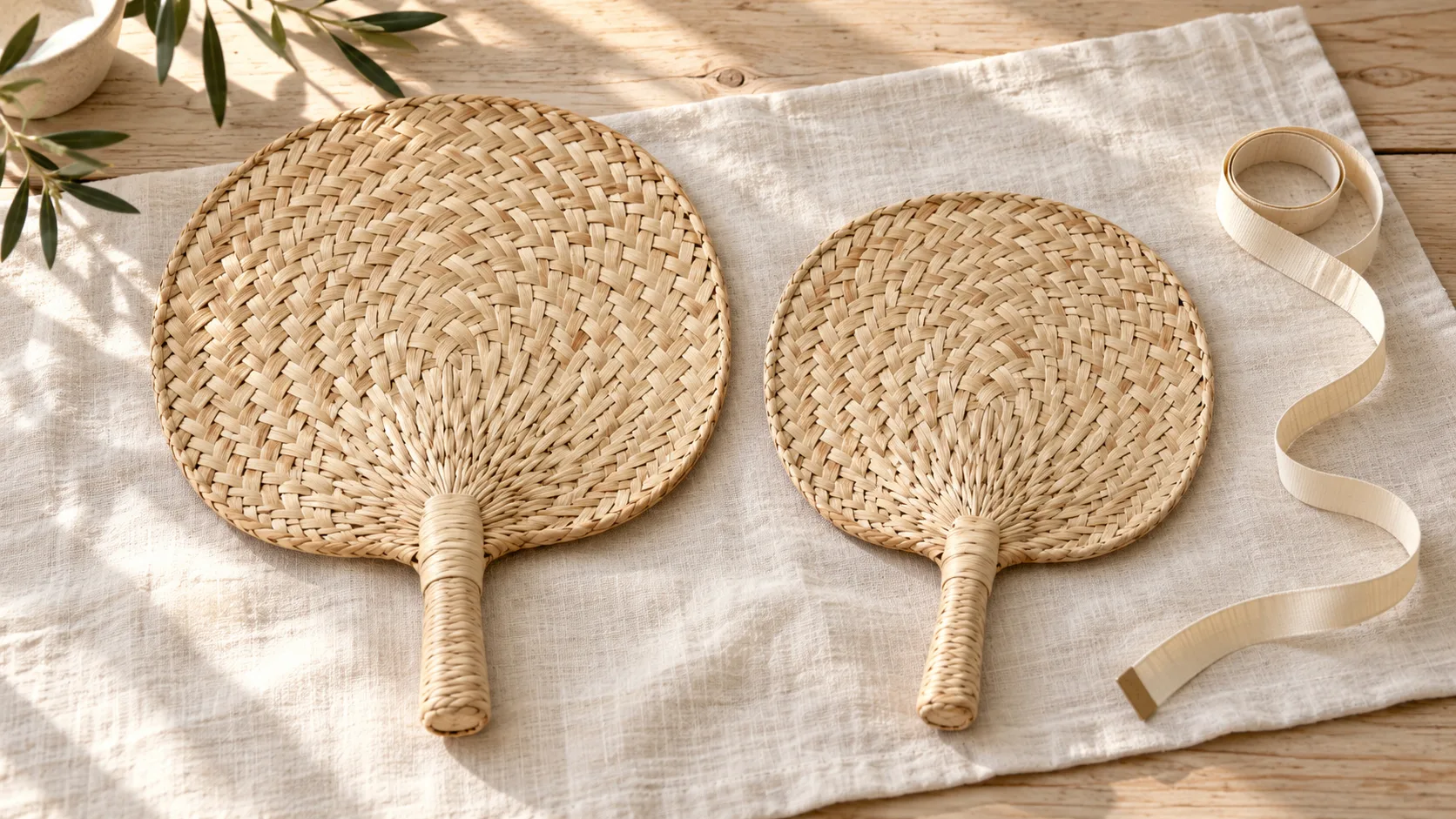
This distinction matters when comparing two designs. Fans with similar overall heights may have different woven surfaces or handle proportions. A single measurement is therefore a limited basis for deciding whether two products will look or feel similar.
2. Start with the intended use
Describe the project before requesting a size recommendation. A fan intended for a ceremony chair, a hotel welcome bag or a retail gift collection may need to fit a different arrangement.
For a seated event, consider the space around the guest and the other items placed at the seat. For a welcome bag, compare the fan with the opening and internal dimensions. For retail presentation, consider the display fixture and how the product will be picked up.
These details help narrow the options without treating one application as having a fixed standard size.
3. Compare the outline as well as the width
A round, oval or half-moon design can occupy space differently even when the maximum width is similar. The position of the widest section and the transition toward the handle influence the overall visual balance.
Ask for a straight-on photograph with a clear scale reference. Avoid comparing a close-up of one fan with a distant lifestyle photograph of another.
If you are reviewing several shapes, place their measurement images side by side. Compare the silhouette and proportions rather than choosing whichever product fills more of the photograph. Camera framing does not establish actual size.
4. Review grip comfort and balance
Handle length is useful information, but the shape and construction of the grip matter too. A longer handle is not automatically more comfortable, and a larger woven body does not automatically make the complete product easier to use.
Where samples are available, hold the fan and make gentle, normal fanning movements. Consider whether your hand fits comfortably and whether attached accessories occupy the grip area.
Review the complete product rather than estimating comfort from the outline alone. If the intended audience has particular handling requirements, discuss those requirements before selecting the design.
5. Do not use size alone to predict performance
It can be tempting to assume that a wider fan will always provide a better experience. In practice, the finished result also depends on the weave, construction, weight, flexibility and the way the person moves it.
An open weave and a tightly woven surface may behave differently, even at similar dimensions. Comparing width alone does not establish airflow or suitability.
For projects where everyday usability matters, compare physical samples of the actual designs under similar conditions. Treat that review as a product comparison, rather than presenting an informal trial as a certified performance test.
6. Check the complete presentation
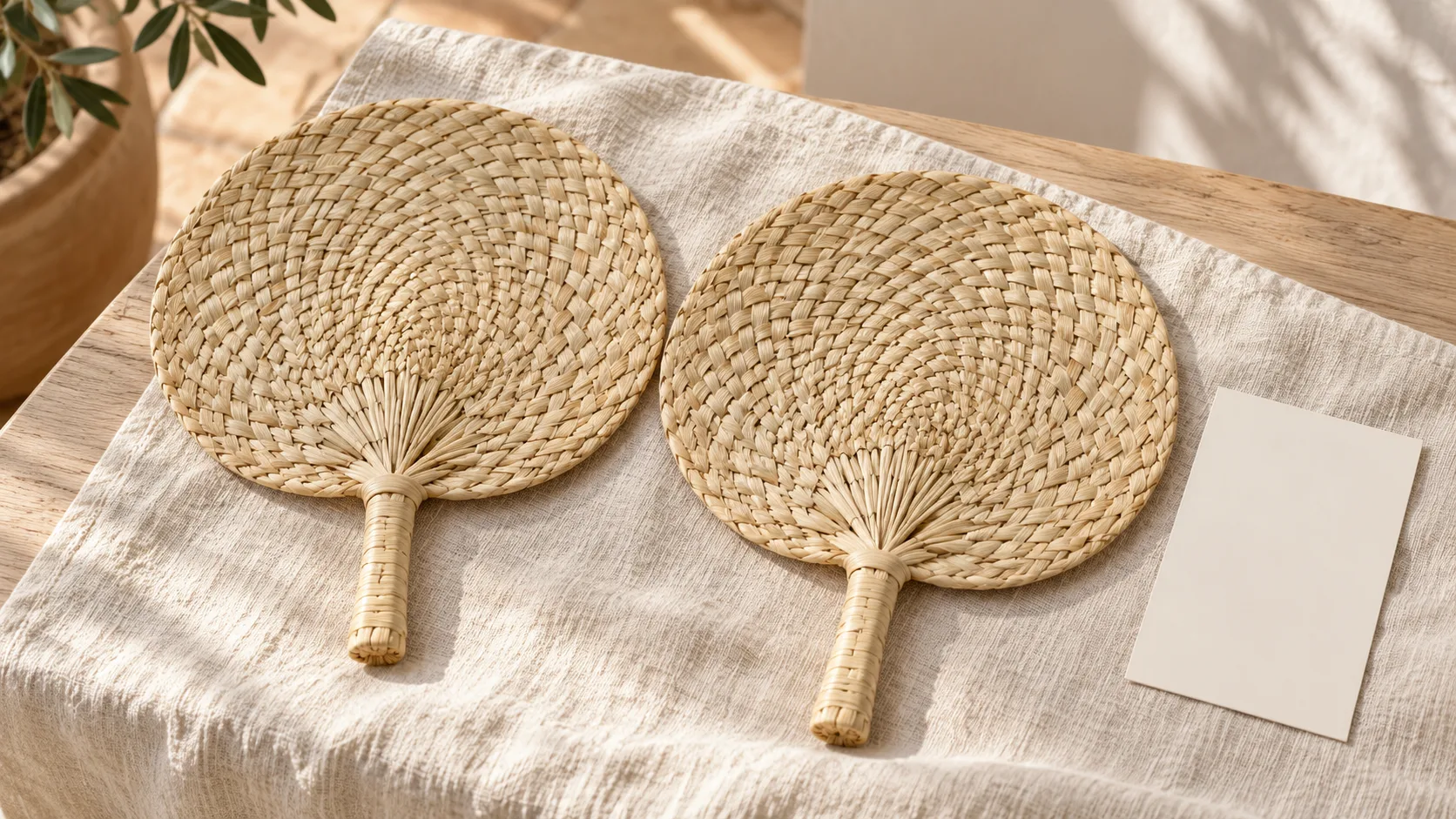
Place the proposed fan beside the items that will accompany it. These might include a ceremony program, a welcome card, a ribbon or a gift bag.
A fan that looks balanced on its own may dominate a compact presentation. Another may leave more space for the accompanying items but have less visual presence than intended.
A paper outline can help you assess basic fit before a sample arrives. However, it cannot reproduce thickness, texture, handle construction or movement. Use it to answer a layout question, then review the actual product when those physical details matter.
7. Allow room for packaging and accessories
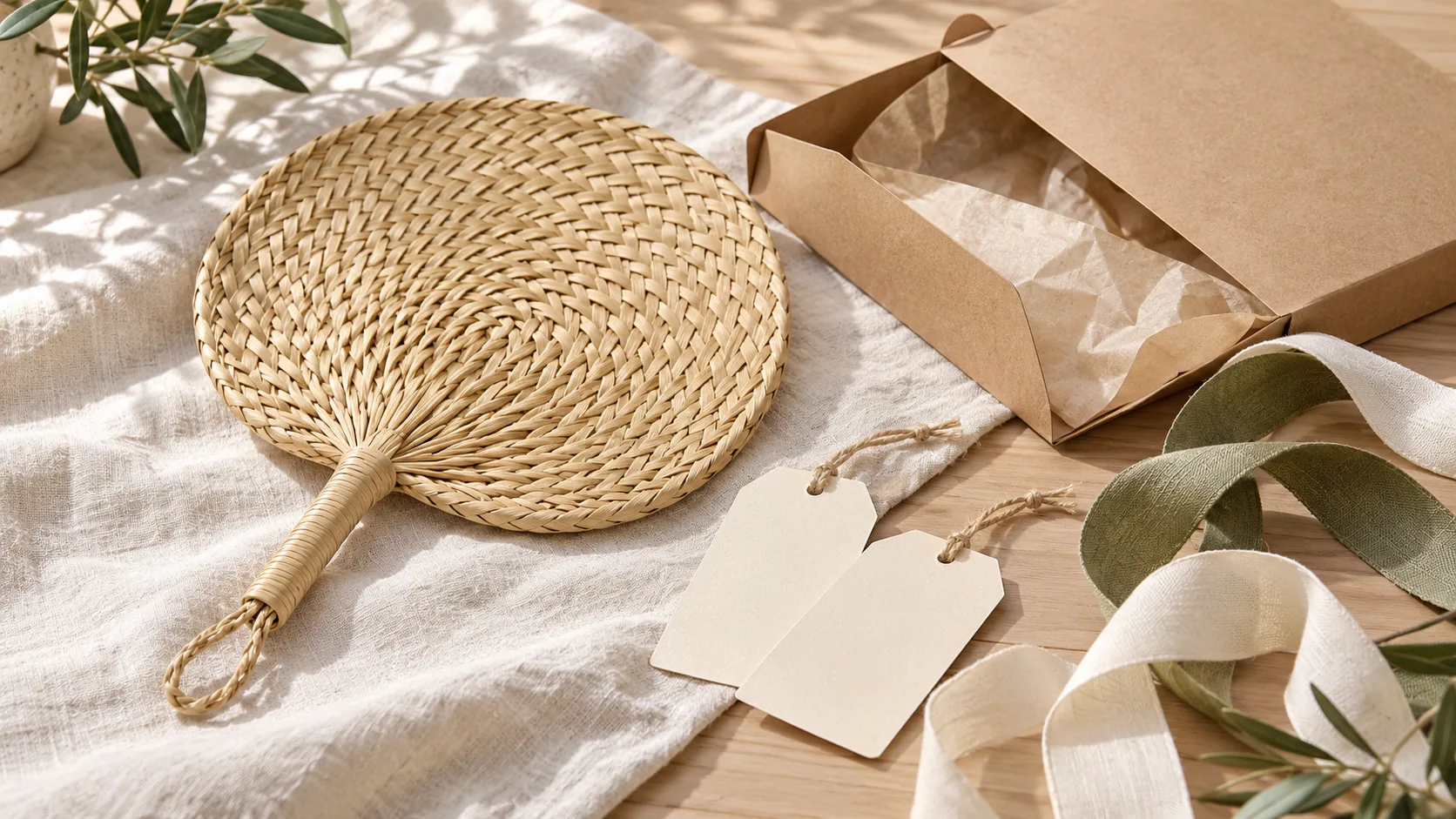
Check packaging against the assembled fan, including any approved tag, ribbon or protective layer. The bare product dimensions may not capture the space needed around a bow or attachment.
Confirm the usable internal space of the proposed sleeve, pouch or box. Ask how the fan will be inserted and removed, and whether its edges or accessories will press against the packaging.
For larger orders, request packing information for the selected design and quantity. Do not assume that a small change in fan width produces an equally small change in carton requirements. The arrangement needs to be checked.
8. Compare available designs before requesting a custom size
Ask which existing designs are closest to your requirements. A suitable available shape may meet the project brief without changing the dimensions.
If a custom size is important, explain the reason. You may need to fit a particular package, coordinate with another item or achieve a specific presentation.
Ask whether the proposed adjustment is feasible for that material and construction. Confirm any implications for sampling, quotation and production arrangements. Do not assume that an existing fan can simply be enlarged or reduced while retaining every other characteristic unchanged.
Send WOVENA a practical size brief
A useful size inquiry includes your intended use, preferred shape, reference image, estimated quantity and any packaging limits. If possible, identify which dimension is essential and which is flexible.
WOVENA can discuss suitable product options and customization possibilities according to the selected design. Confirm the actual dimensions and relevant sample details before approving the order.
The right size is the one that works with the complete project: comfortable to handle, appropriate for the presentation and compatible with the agreed packaging.