Prepare clearer repeat orders for custom woven fans. Learn how to record product specifications, manage artwork versions and confirm changes before placing your next order.
A successful first order gives a buyer a useful starting point for the next one. However, asking for “the same woven fan again” can leave important details open to interpretation. The supplier may recognize the product, while a new buyer, designer or event coordinator may be working from a different photograph or artwork file.
For hotels, lifestyle brands and recurring event programs, a repeat order works best when the product is defined through a shared reference. That reference should explain what remains unchanged, what needs updating and which details require confirmation before production.
The following approach helps buyers prepare clearer reorders without expecting natural materials and hand weaving to produce perfectly identical pieces.
1. Identify the exact previous order
Start with the previous order reference, product name and the version you want to repeat. Include the supplier’s product reference where available.
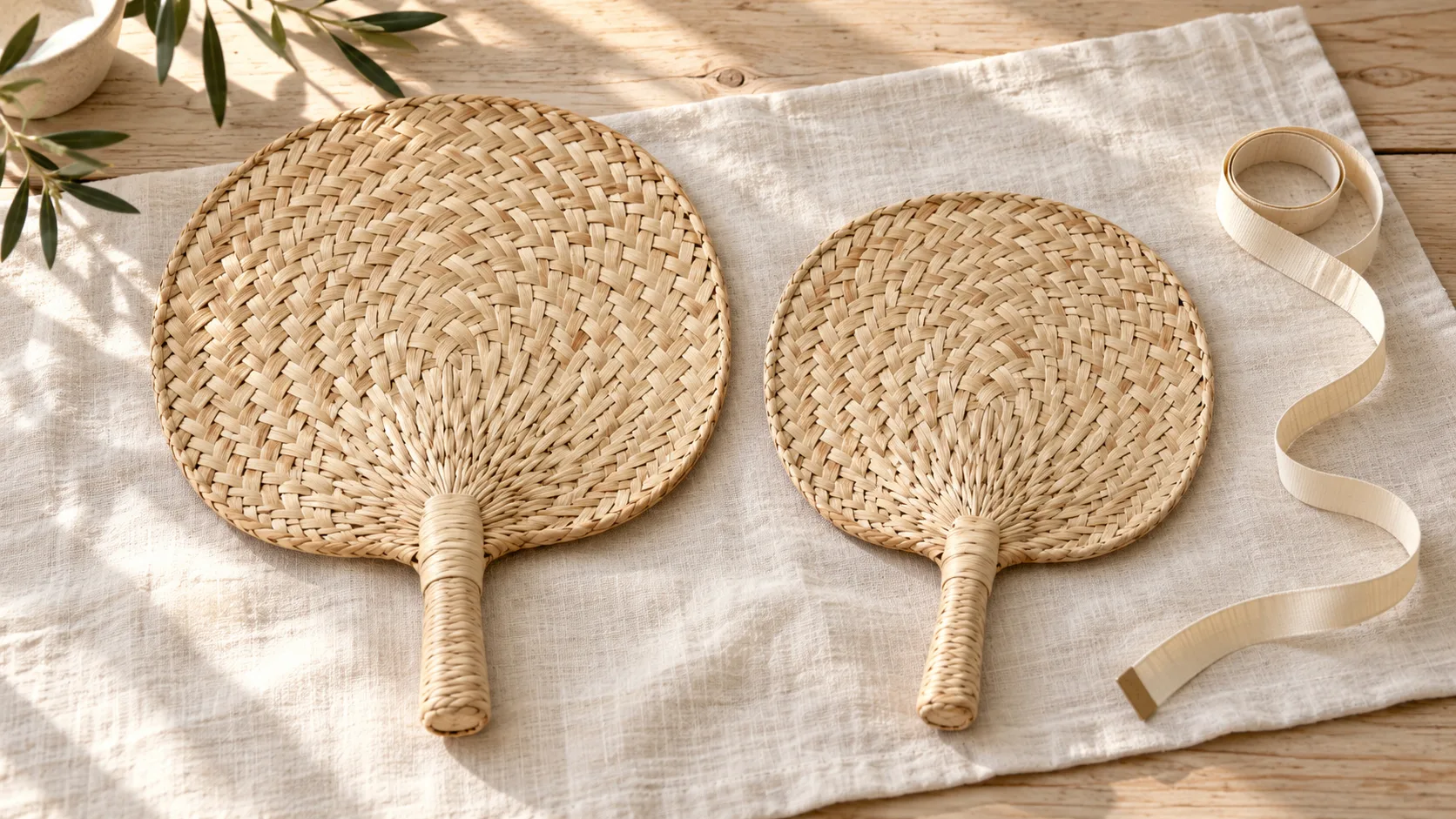
If the original order included several fan shapes, ribbon colors or packaging arrangements, identify the specific combination. A photograph of the full collection may not show which version is required.
Also explain whether the new order is a direct repeat or an adaptation. A different destination, quantity or presentation format may introduce requirements that were not part of the earlier order. Naming these differences at the beginning keeps the discussion focused.
2. Keep one current specification record
Create a concise record of the approved product. Include the fan’s material description, overall dimensions, shape, weave pattern, handle construction and agreed finishing details.
Record how dimensions are measured. For example, distinguish overall height from the woven body height, and identify the points used to measure maximum width.
Where tolerances were agreed previously, retain those details. If no tolerances were established, ask the supplier what is realistic for the selected construction. Do not add a numerical tolerance simply to make the document appear complete.
The record should be understandable to someone who did not manage the first order.
3. Use physical and photographic references together
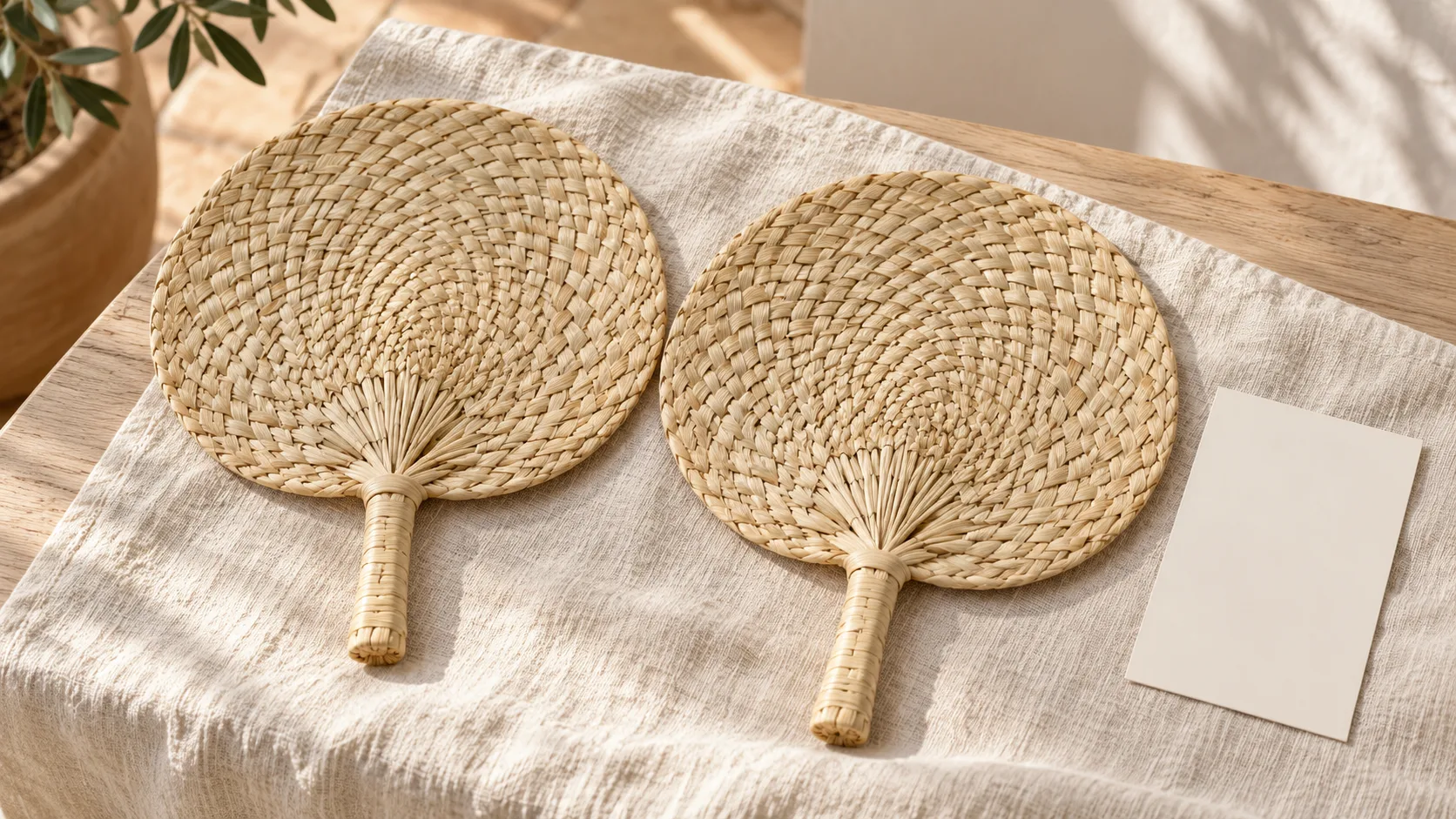
Keep an approved physical sample where practical, along with clear photographs showing the front, back, edge and handle. Identify which sample represents the accepted production version.
Photographs are useful for communicating shape and placement, but lighting and camera settings can alter the appearance of natural tones. A physical reference can help the discussion, although its condition should also be considered if it has been stored or handled for a long period.
Ask whether the supplier retains a matching reference and confirm that both parties are referring to the same version. Do not assume an old sample remains available indefinitely.
4. Define acceptable natural variation
Consistency does not require every natural fiber to have exactly the same shade or width. It does require an agreed understanding of the product’s overall appearance and construction.
Separate characteristics that may vary from details that must follow the specification. Natural tone differences may be acceptable, while the selected silhouette, handle arrangement or tag wording needs a clearer fixed reference.
Where appearance is especially important, discuss representative examples showing the proposed range. Avoid relying on a single flattering photograph to define the appearance of an entire repeat order.
5. Control artwork and accessory versions
Repeat orders often involve small changes: a new wedding date, a revised logo, another hotel property name or updated packaging information.
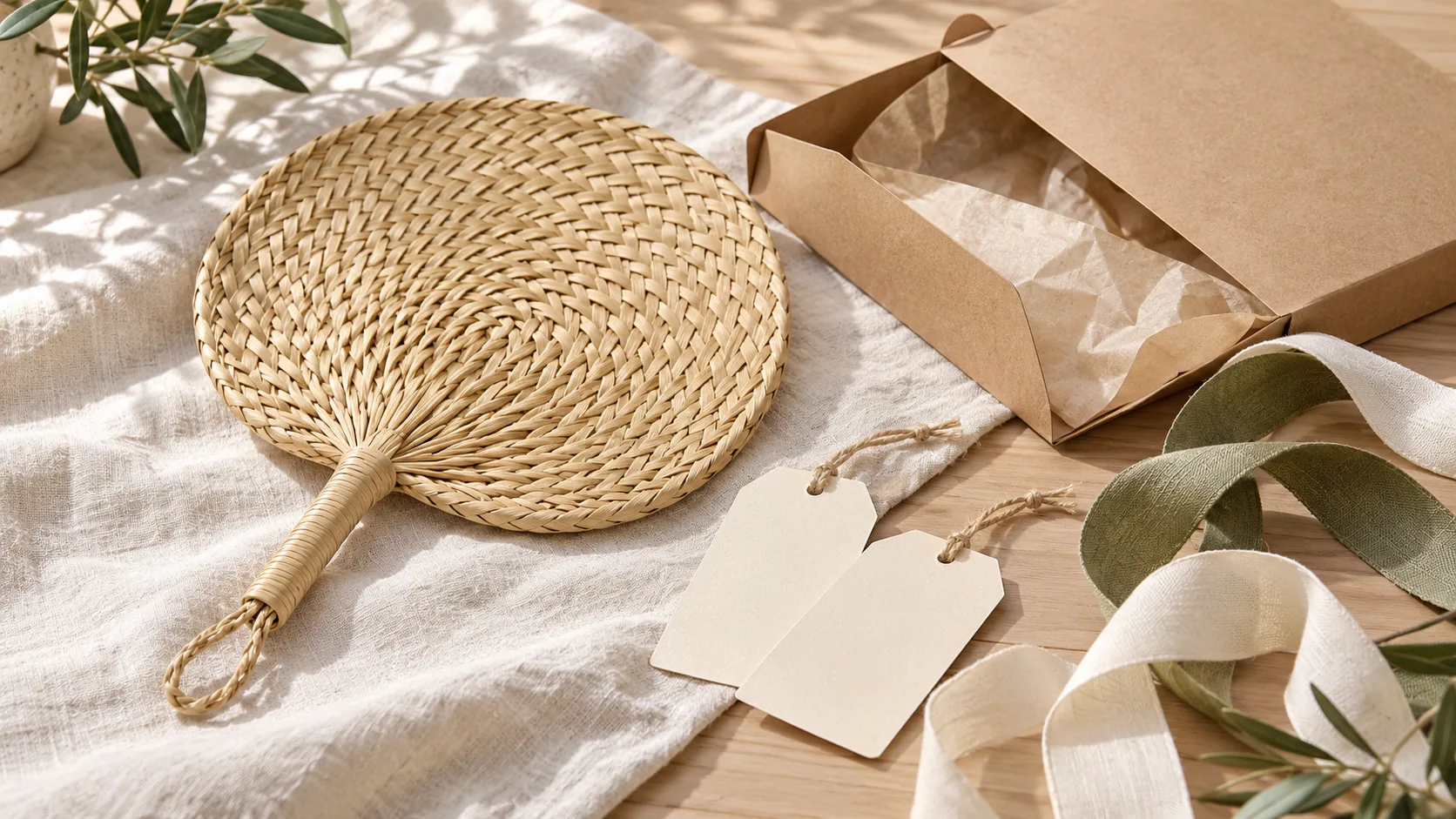
Prepare a clearly named artwork file and identify which earlier version it replaces. Confirm whether the change applies to the fan, tag, ribbon, packaging or several components.
Keep unchanged components visible in the order record. A new tag design should not accidentally introduce a different ribbon or attachment position.
Review the complete wording again, even when most of the design has been used before. Familiarity with an earlier layout can make a small but important change easier to overlook.
6. Reconfirm availability and commercial details
A previous order does not establish current material availability, pricing, minimum quantities or production timing. Ask for a quotation based on the new order’s actual requirements.
Confirm whether the same construction and accessories remain available. If a substitution is proposed, request an explanation of what changes and how it affects the finished presentation.
Discuss the required destination and delivery target again. A different shipping destination or packing arrangement should be reviewed on its own terms.
Keep these confirmations separate from the product reference so that an old commercial document is not mistaken for the current agreement.
7. Decide whether a new sample is needed
The need for another sample depends on the changes and the confidence both parties have in the reference.
A revised material, altered dimensions, different handle or new branding method may justify reviewing a physical version before production. A wording-only change may require a different approval approach, depending on the process and product.
Ask what the proposed sample would demonstrate. Confirm which details it includes and which remain unchanged from the previous reference.
Do not treat a new digital layout as proof of every physical characteristic. Equally, avoid requesting a sample without identifying the question it needs to resolve.
8. Record changes before confirming production
Prepare a short change summary alongside the specification:
- Details repeated from the previous order.
- Details updated for the new order.
- Proposed substitutions requiring approval.
- Questions still awaiting confirmation.
Give the final reference a clear date or version name. Ask the supplier to confirm the same document before production begins.
When the order arrives, keep relevant feedback with that version. This creates a more useful starting point for the following reorder than a scattered collection of messages.
Discuss your repeat order with WOVENA
For a repeat woven fan project, share the previous order reference, current product photographs, estimated quantity, destination and any requested changes with WOVENA.
Available materials, customization options and sampling arrangements should be confirmed for the selected design and current order. A clear reference helps both parties discuss the intended result while allowing natural woven products to retain their material character.