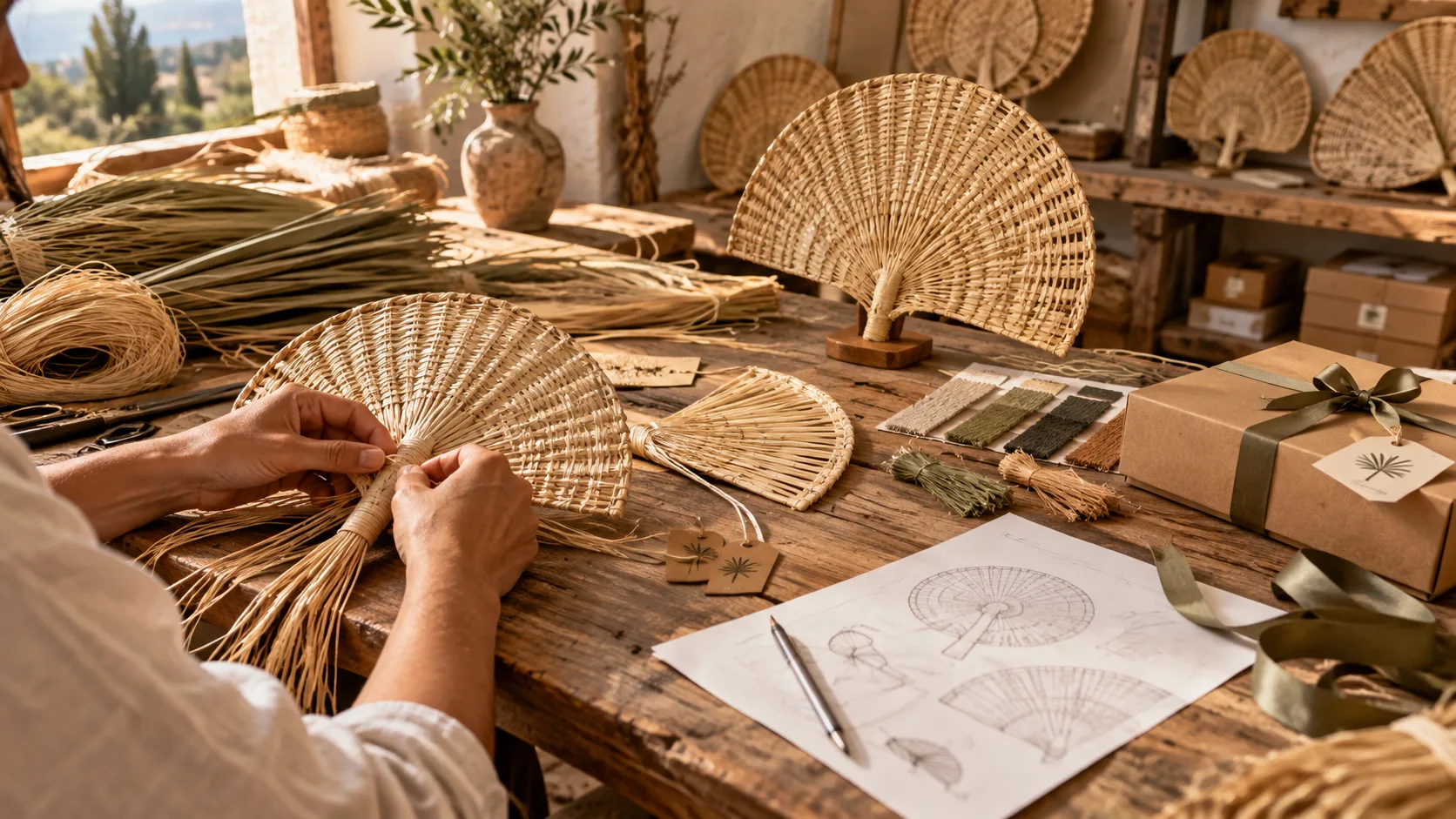
From concept design and material selection to sampling, branding, packaging, and bulk production, this guide details how to develop custom hand fans for wholesale, weddings, resorts, events, and private label projects.
From Concept to Bulk Order: How Custom Hand Fans Are Made for Wholesale Projects
A successful custom hand fan project usually begins long before production starts.
For wedding brands, resorts, lifestyle companies, retailers, event planners, and private label businesses, making a custom hand fan typically involves several stages: defining the product concept, selecting materials, determining the shape, designing the branding, confirming samples, preparing packaging, and finally moving into bulk production.
Understanding this process helps buyers and suppliers communicate more clearly, and reduces the risk of delays or unexpected changes.
In this guide, we will walk you through how custom hand fans evolve from an initial idea into a finished wholesale product.
1. Every Custom Hand Fan Starts with a Clear Purpose
Before discussing materials or colors, the first question should be:
What scenario will this fan be used in?
Different uses require different product decisions.
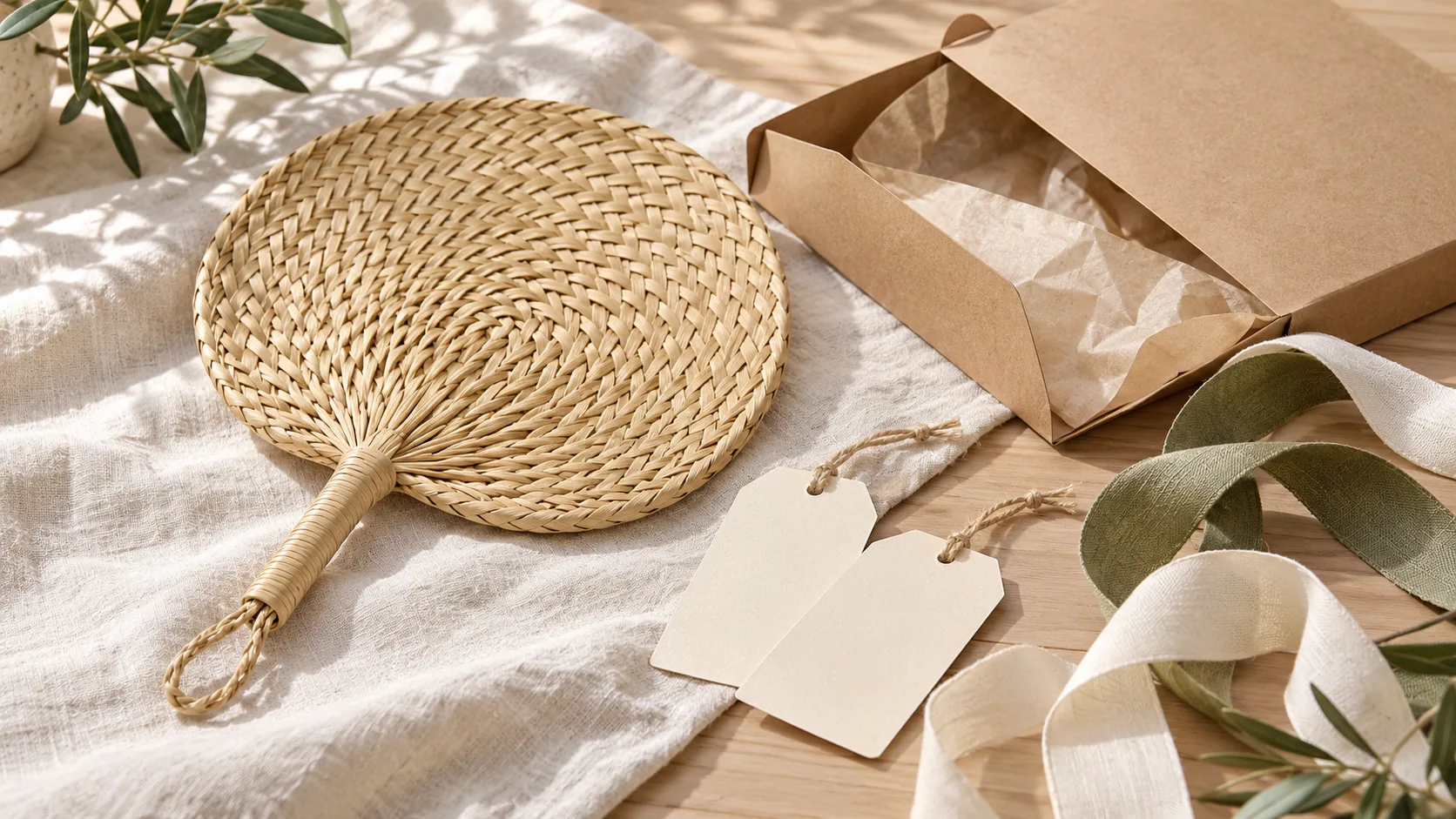
For example, a fan designed for a destination wedding may prioritize an elegant appearance, lightweight craftsmanship, personalized hang tags, and ribbon decorations.
Resort or hotel fans, on the other hand, may require greater durability, custom branding, and packaging suited to use as an in-room amenity.
Private label retail fans may need to focus more on product consistency, packaging, labeling, and the ability to reorder.
Common applications for custom hand fans include:
- Weddings
- Resorts
- Hotels
- Beach clubs
- Corporate events
- Brand promotion events
- Retail product lines
- Promotional campaigns
- Private label projects
- Seasonal gift collections
The intended use helps determine the most suitable materials, shape, size, branding presentation, and packaging solution.
2. Choosing the Right Materials
Material is one of the most important elements of a custom hand fan.
It directly affects the finished product's feel, appearance, weight, durability, and overall brand character.
For natural woven fans, common materials include:
- Bamboo
- Palm leaf
- Raffia
- Rattan
- Natural grass
- Cotton rope
- Other plant fibers
Each material presents a different visual language.
Bamboo
Bamboo is lightweight and structurally strong, suitable for a variety of fan designs.
It can be used for fan handles, ribs, frames, and woven structures.
Palm Leaf
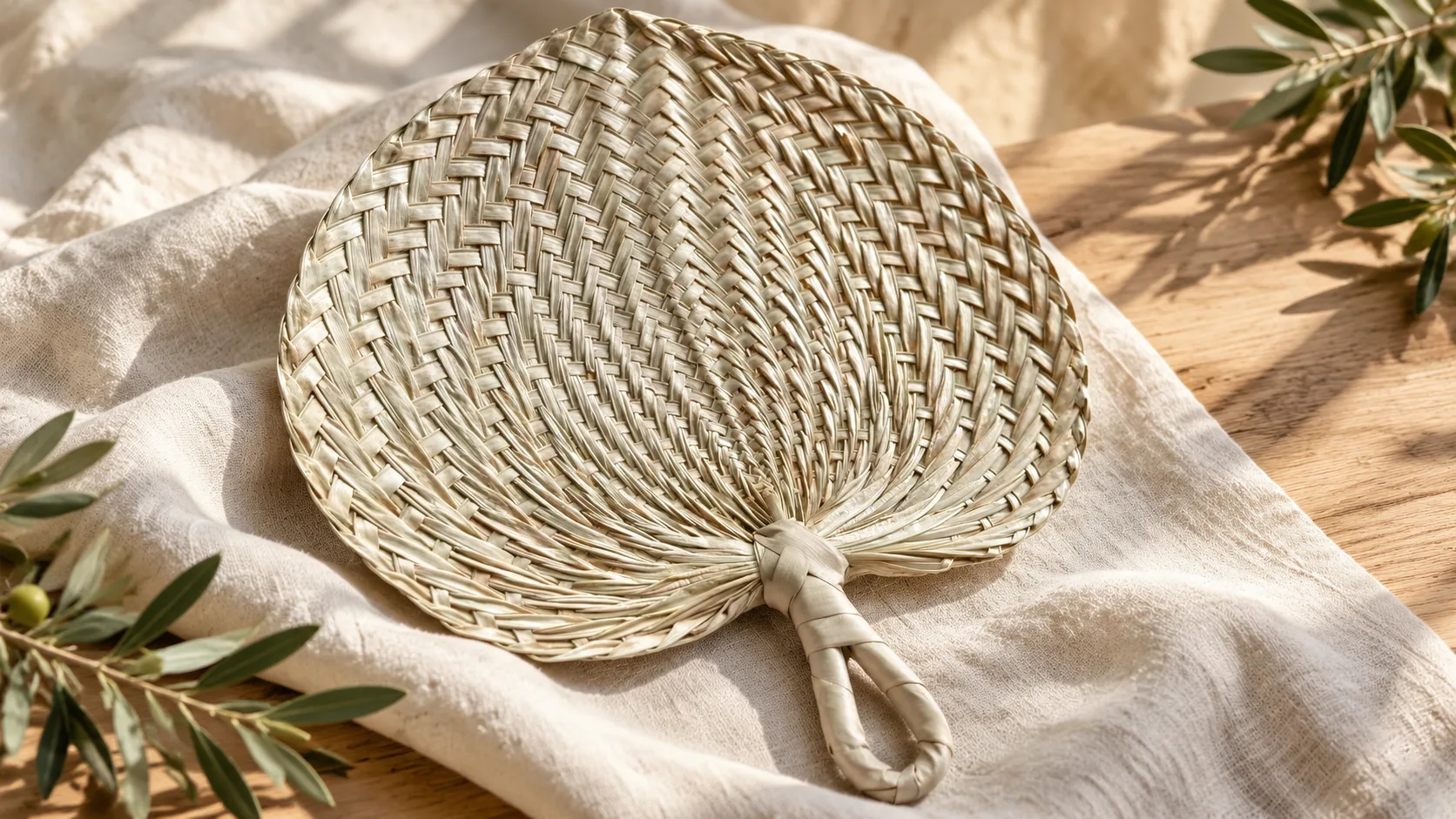
Palm leaf presents a natural, organic appearance, particularly suited for weddings, resorts, beachside settings, and lifestyle products.
Raffia
Raffia has a softer feel and a more artisanal texture, ideal for creating relaxed, craft-inspired products.
Rattan
Rattan can create a sturdier structure and form a distinctive woven texture.
A professional supplier should be able to help buyers understand which material best suits the desired product style.
3. Designing the Fan Shape
Once the material is selected, the next step is to determine the fan's shape.
Custom hand fans can be designed into a variety of silhouettes.
Common options include:
- Round fan
- Oval fan
- Paddle fan
- Teardrop fan
- Half-moon fan
- Folding fan
- Heart-shaped fan
- Custom shape
The shape should align with both the visual style and the intended use.
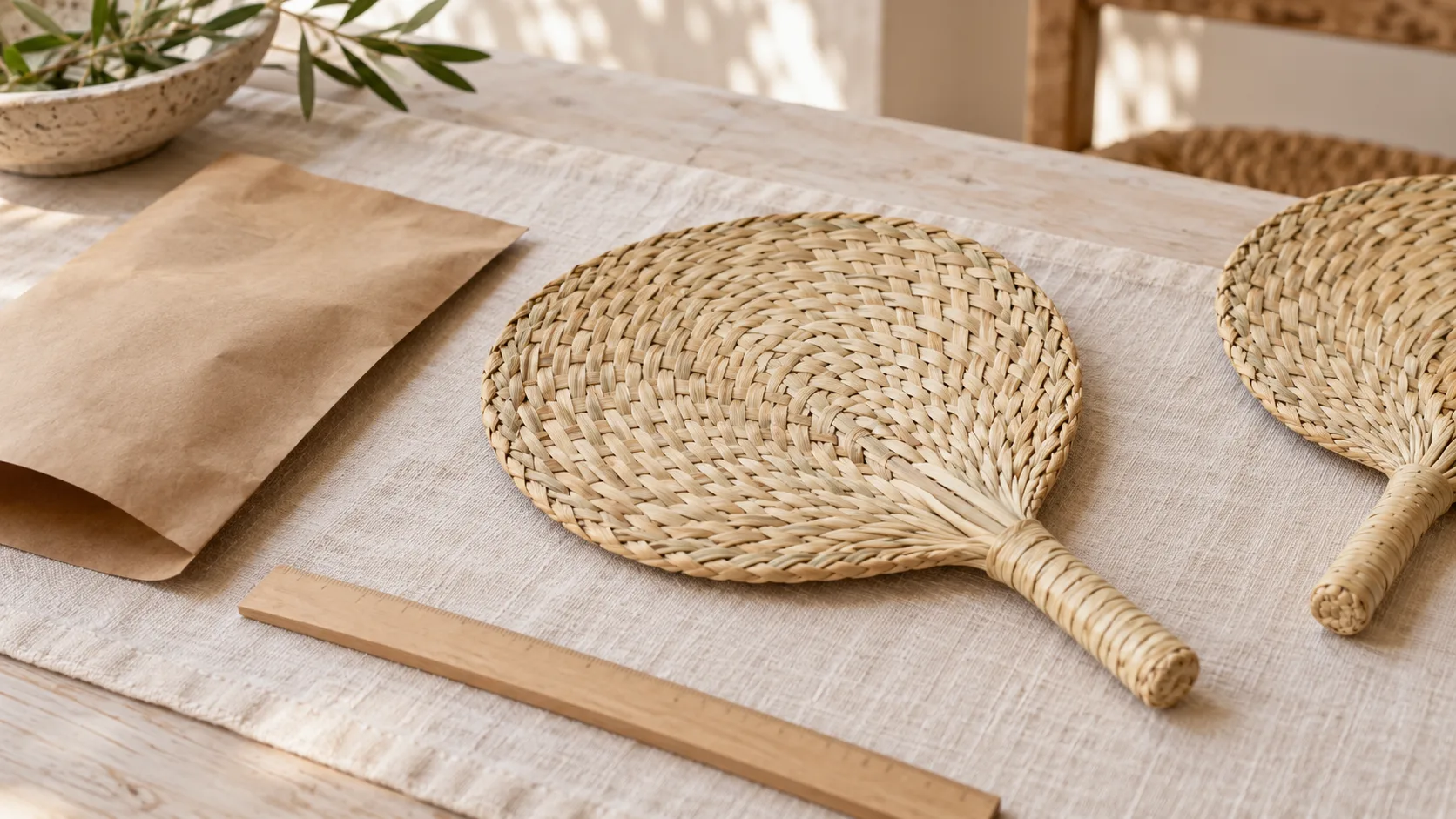
For example, round and oval woven fans are typically very suitable for wedding and resort projects.
Folding fans are more portable and can provide a larger display area for printed patterns.
Paddle fans offer a striking visual area for logos or brand marks.
For wholesale projects, it is important to consider not only appearance but also packaging efficiency, shipping volume, and durability.
4. Choosing Size and Proportions
Size significantly affects the fan's user experience.
Smaller hand fans are suitable as gift sets or wedding favors, while larger fans create a stronger visual impact at events or in hotel reception settings.
Buyers should consider:
- Overall fan width
- Fan height
- Handle length
- Handle thickness
- Weight
- Packaging dimensions
Suppliers should provide clear product dimensions before sampling.
This helps avoid misunderstandings and ensures the final product fits the target market.
5. Designing the Weave Pattern
For custom woven hand fans, the weave pattern is an important part of the product design.
Different weaving techniques can produce very different visual effects.
Some designs use tight weaves to present a solid appearance.
Others use loose weaves to create a light, more decorative look.
Options may include:
- Tight weave
- Loose weave
- Radial weave
- Geometric pattern weave
- Pattern-inspired weave
- Decorative border weave
- Mixed weave patterns
Slight variations in natural materials are part of the handcrafted character, but the overall pattern across the order should remain consistent.
For private label projects, buyers can also create a signature weaving style to become part of the brand identity.
6. Adding Custom Colors
Color is another important customization option.
Natural fans typically appear in warm beige, straw, light brown, brown, or neutral tones.
However, custom projects may require more color options.
Available customization options may include:
- Colored edging
- Dyed fibers
- Painted handles
- Colored tassels
- Custom ribbons
- Printed patterns
- Brand hang tags
For larger orders, buyers can provide color references or Pantone codes.
The coloring effect on natural materials may differ from that on synthetic materials, so slight color variations may occur.
Sampling is the best way to confirm the final appearance.
7. Choosing the Best Logo Technique
Branding transforms an ordinary hand fan into a custom product.
There are several ways to apply logos and brand identity.
Common options include:
- Printed logo
- Laser engraving
- Wooden handle engraving
- Embroidered logo
- Woven label
- Leather hang tag
- Paper hang tag
- Printed ribbon
- Custom packaging
The best technique depends on the fan's material and the project's visual style.
For example, engraved handles are typically very suitable for natural woven fans, maintaining a clean, understated appearance.
Printed logos are better suited to smoother-surfaced materials.
Hang tags and ribbons are especially popular in wedding and hotel reception projects.
A professional custom hand fan supplier should be able to recommend the most suitable branding technique for each product.
8. Packaging Design
Packaging should be considered at the beginning of a project, not the end.
This is especially important for wholesale and private label products.
Common packaging options include:
- Individual pouch
- Paper sleeve
- Cotton bag
- Kraft box
- Gift box
- Custom printed box
- Hang tag
- Belly band
- Product card
- Branded tissue paper
Different markets have different packaging style requirements.
Wedding products may use softer, more decorative packaging.
Resort products may use minimalist branded packaging.
Retail products may require barcodes, product information, or display boxes.
Good packaging helps create a more complete product experience.
9. Producing the First Sample
Once specifications are confirmed, the supplier can begin sampling.
Samples allow buyers and suppliers to verify together that the concept is feasible in actual production.
Buyers should review the following:
- Materials
- Shape
- Size
- Color
- Weave pattern
- Handle construction
- Logo placement
- Logo size
- Accessories
- Packaging
It is normal for buyers to request adjustments after reviewing the first sample.
For complex products, two or even more rounds of sampling may be needed.
This stage is important, because making adjustments during sampling is far easier than making them after bulk production has begun.
10. Confirming the Final Sample
Once the sample meets the buyer's requirements, it becomes the reference standard for bulk production.
The approved sample should clearly define the following elements:
- Product dimensions
- Materials
- Color
- Logo
- Accessories
- Packaging
- Detail finishing
This helps both parties maintain consistency during production.
For larger orders, the approved sample can also be used in quality inspection.
11. Preparing for Bulk Production
Once the sample is confirmed, the order can move into the bulk production stage.
Bulk production usually includes the following steps:
- Material preparation
- Cutting and shaping
- Hand weaving
- Handle assembly
- Logo application
- Surface finishing
- Quality inspection
- Packaging
- Master carton packing
The specific process depends on the fan's design.
For hand-woven fans, production scheduling is especially important, because many steps are completed by hand.
Buyers with fixed event dates or seasonal launch plans should confirm production timelines early.
12. Quality Control During Production
Quality control should run throughout the entire production process.
Typical inspection points include:
- Material condition
- Fan dimensions
- Weave consistency
- Handle strength
- Edge finishing
- Logo accuracy
- Color consistency
- Packaging quality
Because natural materials have slight variations, the goal is not to make every fan look completely identical.
Instead, the supplier should keep consistency within an acceptable range while preserving the product's handcrafted character.
13. Preparing Wholesale Packaging and Master Cartons
Once individual product packaging is complete, the batch will be packed for shipment.
Wholesale orders may require:
- Inner boxes
- Outer cartons
- Packing labels
- SKU labels
- Quantity markings
- Shipping marks
Retail and private label buyers may also require special labeling.
Confirming these requirements in advance can avoid delays before shipment.
14. Planning for Repeat Orders
For brands and wholesale buyers, the first order is often just the beginning.
A reliable supplier should be able to support repeat production.
This requires maintaining complete records of the following information:
- Product dimensions
- Materials
- Color
- Logo placement
- Packaging
- Accessories
- Production specifications
Keeping these details helps make subsequent orders smoother.
It also makes it easier for brands to expand existing products into new colors, sizes, or collections.
Custom Hand Fans for Wedding Projects
Wedding fans are one of the most popular applications for natural woven hand fans.
Common customization options include:
- Couple's names
- Wedding date
- White ribbon
- Custom hang tag
- Engraved handle
- Gift packaging
These products are especially suited for the following scenarios:
- Beach weddings
- Destination weddings
- Outdoor ceremonies
- Summer weddings
- Wedding favors
Natural woven materials complement the relaxed, elegant wedding atmosphere.
Custom Hand Fans for Resorts and Hotels
Resorts and hotels can use custom hand fans as:
- Welcome gifts
- In-room amenities
- Poolside accessories
- Spa gifts
- Retail merchandise
- Event accessories
Hotel brands can present themselves through:
- Engraved handles
- Printed logos
- Branded hang tags
- Custom cloth bags
- Custom gift boxes
Natural materials are also very well suited to beachfront, tropical, Mediterranean, and eco-inspired hotel environments.
Custom Hand Fans for Brands and Private Label
For lifestyle brands and retailers, private label hand fans can become part of a larger product line.
Brands can customize:
- Shape
- Materials
- Color
- Weave style
- Logo
- Packaging
- Product labels
This transforms an ordinary practical item into a recognizable branded product.
Why the Development Process Matters
Custom manufacturing involves many detailed decisions.
When buyers understand the entire process, they can communicate more effectively with suppliers.
A clear development process helps reduce the following issues:
- Sampling errors
- Production delays
- Branding mistakes
- Packaging issues
- Inconsistent quality
It also helps both parties identify potential issues before bulk production begins.
Working with WOVENA
WOVENA develops custom natural woven hand fans for wholesale, weddings, resorts, hotels, events, retail, and private label projects.
Our customization capabilities cover:
- Natural materials
- Custom shapes
- Custom sizes
- Weave patterns
- Colors
- Handles
- Ribbons
- Tassels
- Logo branding
- Hang tags
- Packaging
We support projects from the initial product concept and sampling stages through to bulk production.
Our goal is to combine natural materials and traditional weaving craftsmanship with the practical customization needs of modern brands, serving wholesale projects.
Start Your Custom Hand Fan Project
Developing custom hand fans does not have to be complicated.
A clear process — from product concept and material selection through to sampling and bulk production — helps create products that meet buyer needs and fit the end market.
Whether you are developing wedding fans, resort room amenities, brand event products, or a private label collection, the right combination of materials, design, branding, and packaging can transform an ordinary fan into a uniquely distinctive product.
Looking for custom hand fans for your next wholesale project? Contact WOVENA to discuss your design, materials, sampling requirements, and production needs.