Planning detailed artwork on a natural woven fan? Learn what to confirm about the surface, design requirements and alternative branding locations before approving customization.
A customer may bring a detailed illustration, a patterned fabric reference or a photograph of a printed folding fan and ask for the same effect on a natural woven fan. The visual idea may be clear, but the proposed surface needs a separate discussion.
A woven plant-fiber surface is different from a continuous sheet of paper or fabric. Before promising a result, buyers and suppliers need to confirm the actual fan construction, the artwork requirements and the available decoration methods.
For wedding planners, hotels and brands, the useful question is how to preserve the intended identity while choosing a realistic way to present it. The following points help organize that decision.
1. Identify the actual surface
Begin with the exact fan model. A description such as “natural fan” does not explain whether the proposed decoration would sit on woven fibers, a separate wooden handle, an attached label or another component.
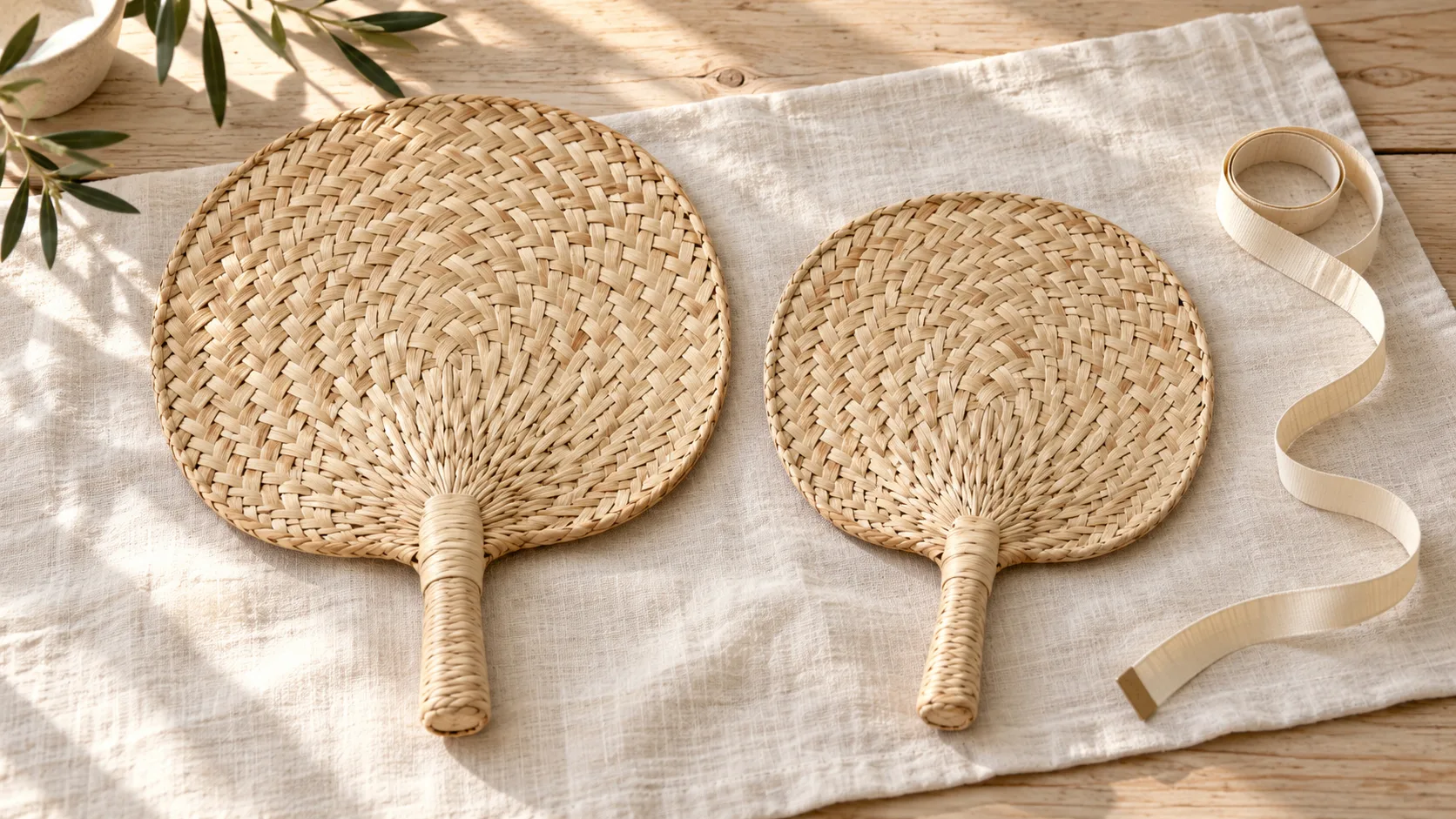
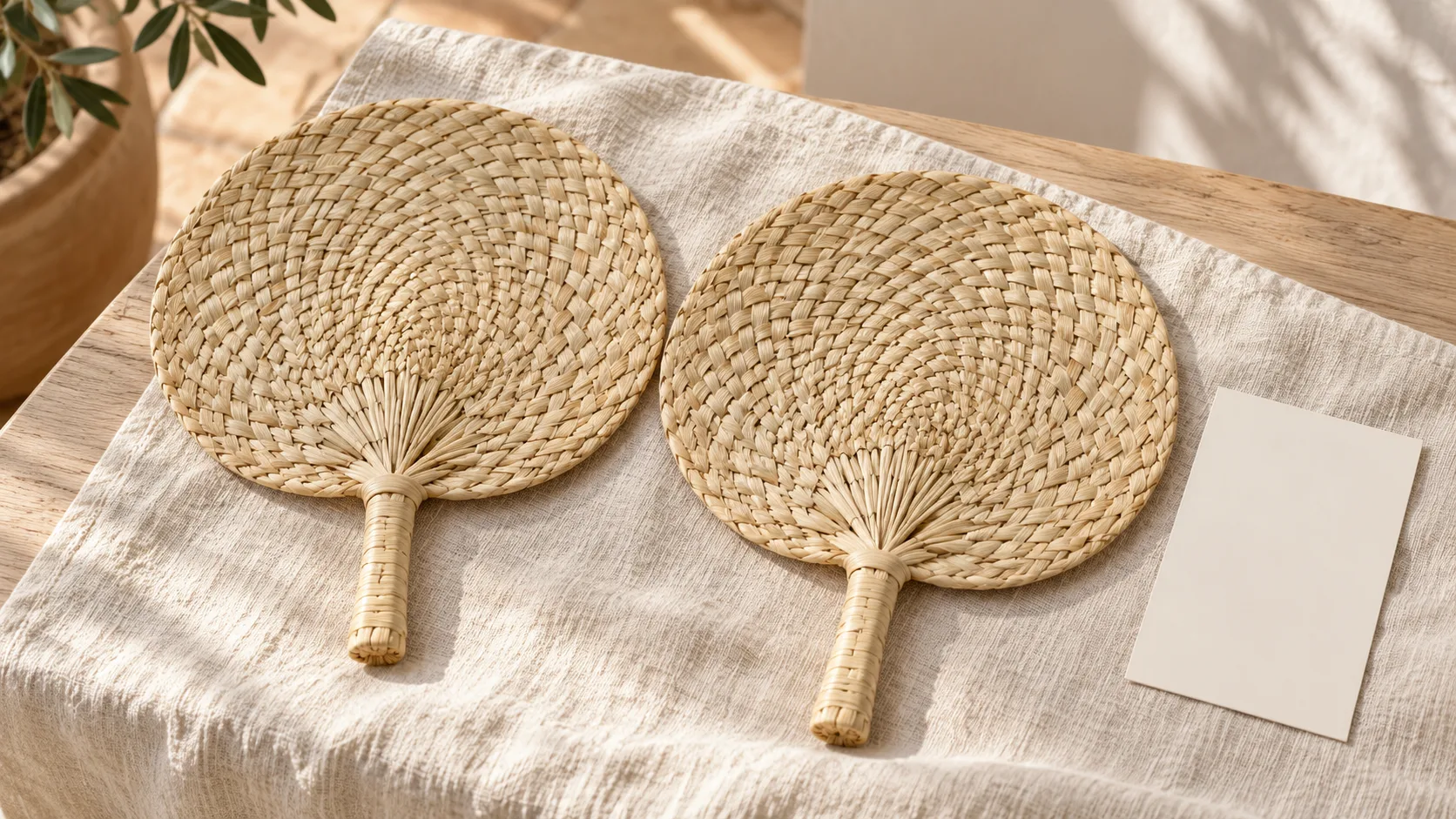
Request clear photographs of the relevant area. Look at the visible texture, spaces between fibers, changes in direction and the shape of the available surface.
For WOVENA’s natural palm-leaf woven designs, do not assume that complex artwork can be reproduced directly across the fan body. The selected construction and requested effect need to be reviewed before any method is proposed.
2. Explain what must remain recognizable
Artwork can contain several different requirements. A logo may depend on precise proportions. An illustration may need small facial details. A repeating pattern may rely on continuous lines across a large area.
Tell the supplier which elements are essential. Is the main priority the full illustration, a recognizable brand mark, a particular color combination or the overall mood?
This distinction creates room for useful recommendations. A project requiring an exact reproduction needs a different discussion from one that can express its identity through a tag, ribbon or coordinated package.
3. Do not approve a method from a digital mockup alone
A digital image can place almost any design over a photograph of a fan. That makes it useful for discussing position and overall composition, but it does not establish that the decoration can be produced on the actual material.
Ask what the mockup represents. Is it a concept, an artwork placement guide or a preview based on a tested process?
Keep that description with the design record. If the method has not been confirmed, label the image as a concept and leave production approval open. A persuasive rendering should not be mistaken for a physical result.
4. Review fine details at the intended size
A design that looks clear on a large screen may be difficult to read when reduced to the available decoration area. Small lettering, narrow spaces and fine lines deserve particular attention.
Provide the intended dimensions of the artwork rather than sending only a reference image. Ask the supplier which details require adjustment for the proposed location and method.
Avoid applying a universal minimum line width or font size without confirmation. Appropriate limits depend on the material, process and design. Review the actual wording and proportions instead of assuming that a larger source file resolves every reproduction issue.
5. Consider a separate branding location
If direct decoration on the woven body is unsuitable, discuss whether the project can use another location.
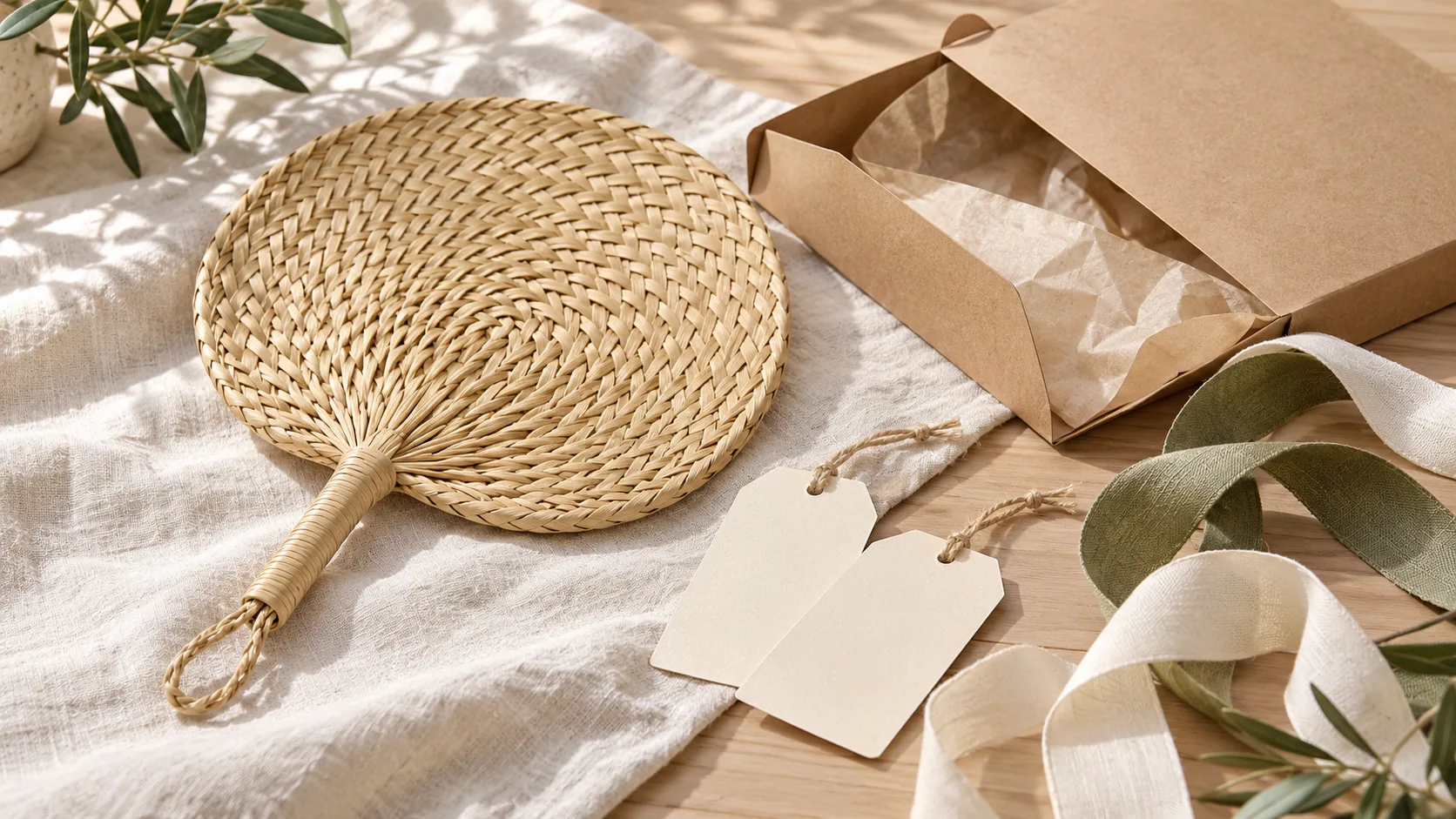
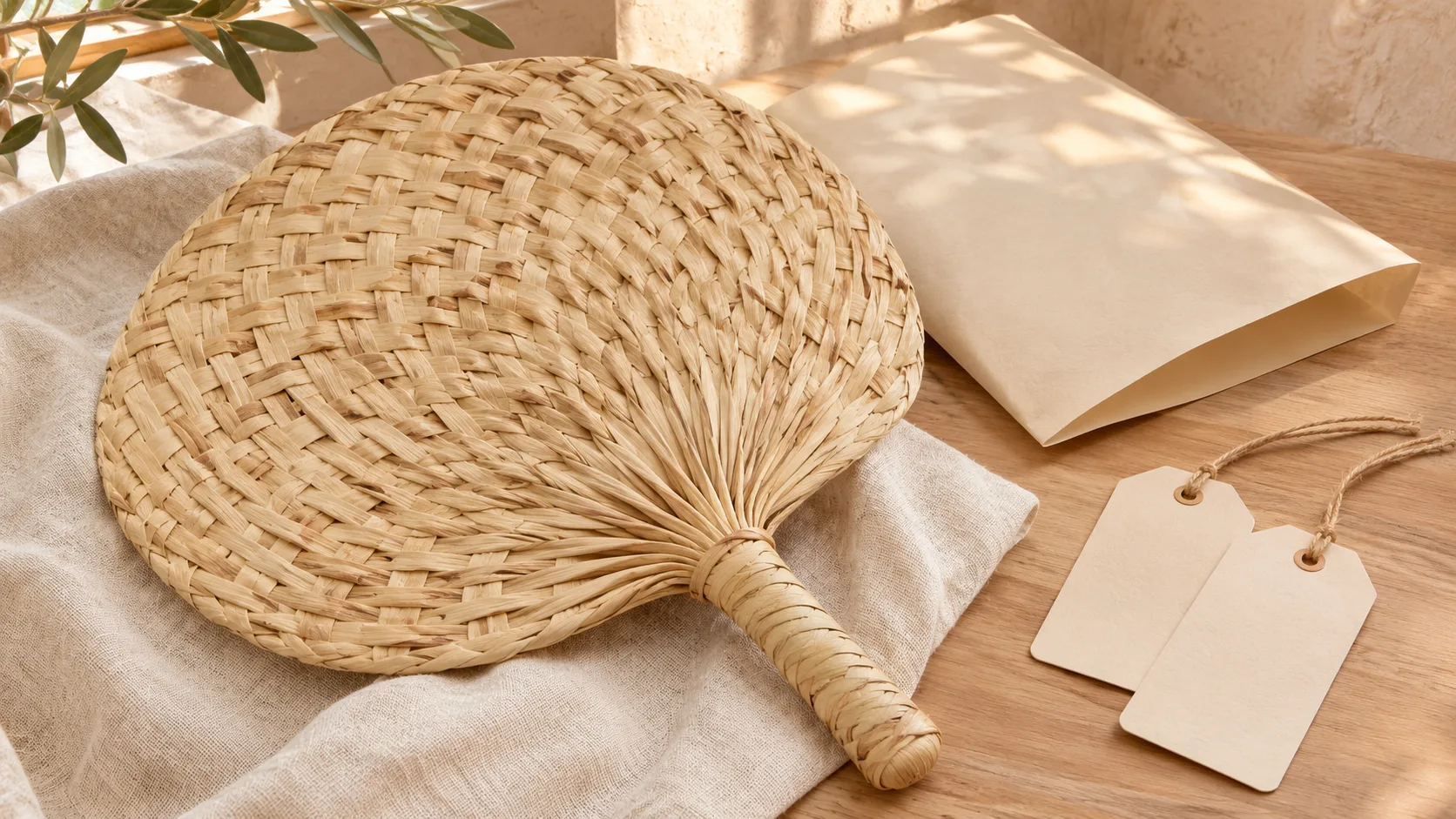
A printed hang tag can carry names, dates, a message or artwork. Packaging can offer a separate area for visual identity. A ribbon can introduce a coordinated color. Where a particular model has a suitable wooden handle, ask whether an appropriate handle-branding option is available.
These are directions to discuss, rather than a guarantee that every option works on every fan. Confirm the selected components, attachment method and appearance before approving the arrangement.
6. Match the fan construction to the artwork priority
Sometimes the detailed illustration is the main reason for the product. In that situation, it may be more useful to reconsider the fan construction than to keep adapting the same image to an unsuitable surface.
A folding fan with a continuous paper or fabric leaf may be worth discussing when broad printed artwork is central to the brief. However, suitability still depends on the specific product and printing process.
A folding construction also introduces its own considerations, including folds, visible sections and the way artwork appears when opened. Confirm availability and review a relevant example before treating it as an approved alternative.
7. Ask a physical sample to answer specific questions
Where a proposed method is available, define what the sample should demonstrate. Relevant questions may include whether the logo is recognizable, whether the placement looks balanced and whether the chosen colors work with the actual material.
Check the result in normal viewing conditions as well as close up. A highly enlarged photograph can reveal detail but may not show how the finished item is perceived in use.
Agree on any required handling or durability checks separately. A visual sample alone does not establish resistance to rubbing, moisture or repeated use.
8. Prepare an artwork brief before requesting a quotation
Send the exact fan reference, intended use, estimated quantity, destination and requested delivery target. Include the artwork, preferred decoration location and approximate dimensions.
Identify which details are essential and which can change. If you are open to tags, packaging or another construction, state that clearly.
Ask the supplier to distinguish confirmed options from ideas requiring development or testing. Keep the final artwork version and the approved physical reference together so that production is based on the same agreed result.
Discuss a realistic branding approach with WOVENA
Natural woven fans have a strong visual character before any decoration is added. A successful custom project works with that character while giving the customer’s identity a clear place.
Share your fan reference and artwork with WOVENA to discuss suitable options for the selected design. Direct reproduction, accessories and alternative product directions should each be confirmed according to the actual project requirements.